Showing posts with label Moses. Show all posts

Tuesday, October 24, 2017

REPORT A DRUG HOUSE SAVE A CHILD

X
http://www.news-sentinel.com/news/local-news/2017/10/24/police-officer-honored-for-help-with-chronic-problem-property-ordinance/
X

REPORT A DRUG HOUSE SAVE A CHILD REPORT A DRUG HOUSE SAVE A CHILD REPORT A DRUG HOUSE SAVE A CHILD REPORT A DRUG HOUSE SAVE A CHILD
TOM OSTROGNAI DAVID C ROACH CITY COUNCIL 1990'S DRUG WARS CRACK EPIDEMIC-
X
XXXX

X

Fort Wayne Police Department Capt. P.J. Smith, at podium, speaks Monday night at the Neighborhoods United Group meeting after members honored him for his work on the city's Chronic Problem Property ordinance. Standing with Smith, from left, are NUG leaders Bud Mendenhall, Deb Elliott and Kay Smith-Shoemaker and Fort Wayne Police Chief Steve Reed. (By Kevin Kilbane of The News-Sentinel)
X
XXXXXXXXXX
Members of the Neighborhoods United Group honored Fort Wayne Police Capt. P.J. Smith on Monday night for his work to help neighborhoods and for helping city officials craft the Chronic Problem Property ordinance, which was passed by Fort Wayne City Council.
Smith was honored during the NUG’s meeting at Grace Presbyterian Church, 1811 Fairhill Road.
He and Fort Wayne Police Chief Steve Reed also answered residents’ questions about the new ordinance and other efforts to control drug dealing and additional problems.
Before the award presentation, Reed praised Smith as an officer who is “always there” for people and as someone he can count on, particularly for special assignments.
During his comments about the Chronic Problem Property ordinance, Reed told NUG members the public discussion leading to its passage by City Council already has reduced the number of police calls to problem commercial properties.
The ordinance describes “chronic problem properties” as ones that “cause a financial burden upon the city by the numerous calls for service to the properties because of illegal and/or nuisance activities that repeatedly occur.”
A business can be ruled a “chronic problem” after it generates 12 or more valid complaints under local, state or federal law within a 90-day period or if it has received at least 12 compliance orders from local authorities during that period.
The goal is to get owners of problem commercial properties to work with city officials on resolving the problems, residents learned.
The city’s longtime drug house ordinance will be used to go after drug dealing operations and the owners of properties where they operate, officials said.
Most of the police calls in the northwest part of the city come from the low-cost hotels and motels along West Coliseum Boulevard, Smith told the group. Those calls often involve drug use, drug overdoses and family fights.
With the Chronic Problem Property ordinance in place, police hope to spend less time on calls to problem properties and more time in neighborhoods working to make residents lives better, Smith said.
X
X
X
X

CHERRY MASTERS LEGALIZED 2018? STILL ILLEGAL SINCE 1990-

X
X
http://www.news-sentinel.com/news/local-news/2017/10/24/kevin-leininger-its-a-gamble-but-indiana-should-look-at-legalizing-video-gaming/
XX


X
X

X
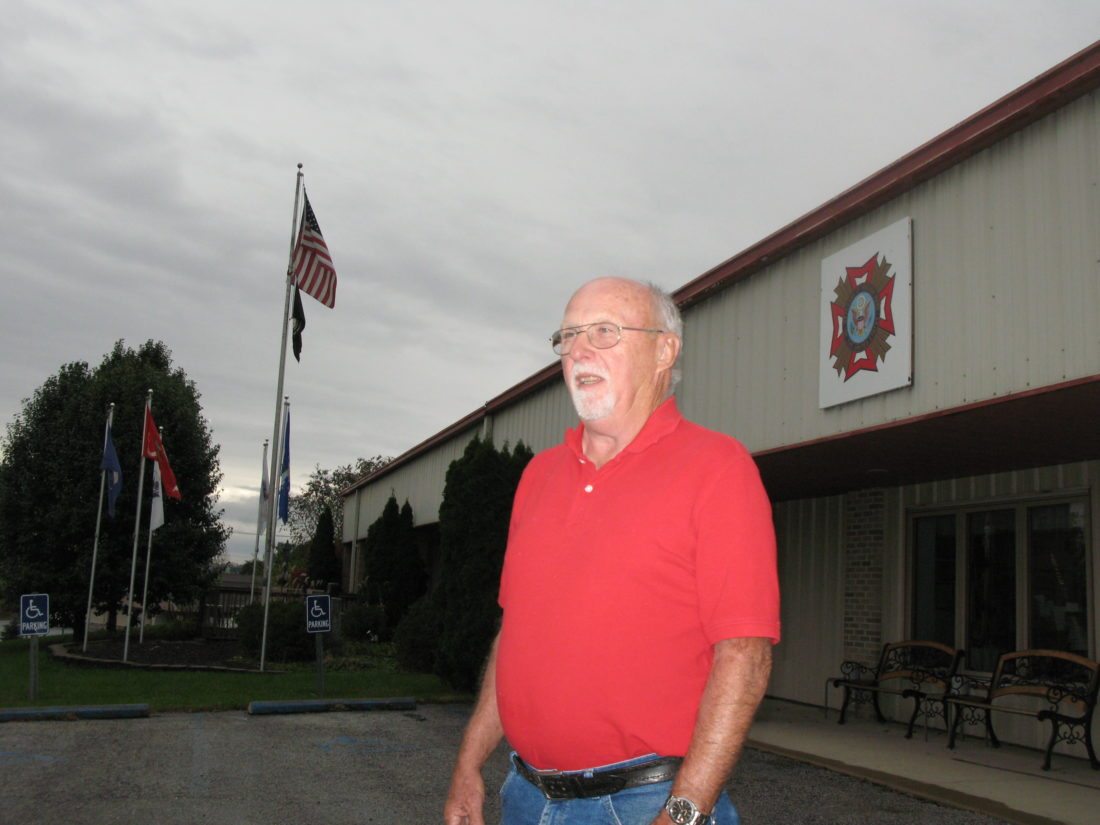
VFW Post 857 at 2202 W. Main St. was built with money from illegal gambling machines, and Canteen Officer Tom Douglass would like to see them return — legally, of course. (News-Sentinel photo by Kevin Leininger)
X
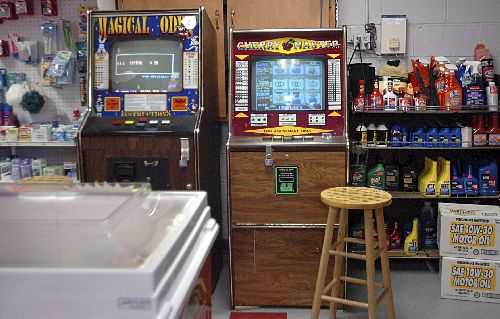
These video gambling machines in Monroeville were illegal in 2006, but a group hoping to legalize them will be in Fort Wayne Wednesday. (News-Sentinel file photo)
X
xxxxxxxx
Just 1,200 people live in Monroeville, and back in 2006 it almost seemed as though there was an illegal gambling machine for each of them.“Cherry Masters” and similar devices were in a gas station, the Pour House tavern and even a supposedly vacant grocery store, and one employee of the ersatz casino no doubt was correct when she assured me there were at least“50 places in Allen County just like this.”
Those days are long gone, thanks to stepped-up law enforcement, but veterans groups, bars and others hurt by the crackdown are hoping to go back to the future with the help of a predictable advocate that will be in Fort Wayne Wednesday to plead its case.
“This could generate $165 million per year in taxes for state and local governments,” predicted Kim Pugh of the Indiana Amusement & Music Operations Association, which represents about 34 coin-operated vending companies statewide. In addition to taxes, video gaming could also generate hundreds of millions of dollars for small business — which no doubt is why representatives of the liquor industry, bowling centers, bars and truck stops will be at VFW Post 857 at 3 p.m. Wednesday to urge Hoosier legislators to do in 2018 what they did not do this year: legalize video gambling.
Success would come as very good news to members of Post 857, which built its facility at 2202 W. Main St. with revenues from 11 illegal machines that used to line the walls — an absence that has been keenly felt in the form of lost income and patronage.
“We’re paying our bills, but we don’t have as much money to donate to charity (such as youth sports),” Commander Bob Beason said. “We have a lot of older members who can’t go out of town (to gamble), and some stopped coming in. The state just increased the gas tax, but (gaming taxes) are voluntary and could fix roads and bridges. Why is the state so reluctant?”
Post 857 Canteen Officer Tom Douglass figures the question was mostly rhetorical, but he answered it anyway.
“The casinos have a lot of money,” he said.
Cynical, perhaps, but possibly also true. If the state allows relatively low-cost video gaming in bars and other over-21 businesses, owners who have invested millions in casinos — no doubt lured by the state’s promise of limiting competition — could lose lots of money. So, for that matter, could the state’s own lottery. In other words, a lot of people have a lot of very good reasons to hope Pugh’s organization fails in its legalization attempt again this year.
But this is an issue that deserves serious consideration, because it epitomizes the danger of government “picking winners are losers.” It’s no secret many bars and service organization have been hurt or have even closed because they could not weather the loss of gambling revenue. But as I mentioned, casino owners have invested heavily under one set of rules and could properly question whether it would be fair to change the rules of the game now. A good argument could be made either way, although my preference would be to allow licensed video gaming, as former Mayor and State Rep. Win Moses proposed in 2006 when it was estimated there were as many as 30,000 illegal machines in use statewide.
That’s not an endorsement of gambling, just an acknowledgement that the lottery and proliferation of casinos has rendered any moral opposition to legalized gambling moot. Is playing a penny machine at the VFW really more dangerous to society than gambling at a casino or buying a lottery ticket?
Back in 2009, as you may recall, studies indicated a casino in Fort Wayne could generate $244 million in annual revenue, $44 million in gaming taxes and support more than 2,280 jobs. But another study by IPFW’s Community Research Institute cautioned a casino could promote“pathological” gambling among a small percentage of the population. Mayor Tom Henry asked the Legislature to allow voters to decide the issue, but the referendum never happened and, given the increasingly saturated casino market, it’s probably just as well.
Video gambling is something else entirely, and deserves a thorough and impartial review. Beason hopes Wednesday’s event will energize supporters who will encourage lawmakers to “get off their dead (seats) and get it done. With penny machines, it’s not like we’d be taking anybody’s pension away.”
This column is the commentary of the writer and does not necessarily reflect the views or opinions of The News-Sentinel. Email Kevin Leininger at kleininger@news-sentinel.com or call him at 461-8355.

X
X